When Help Can’t Wait
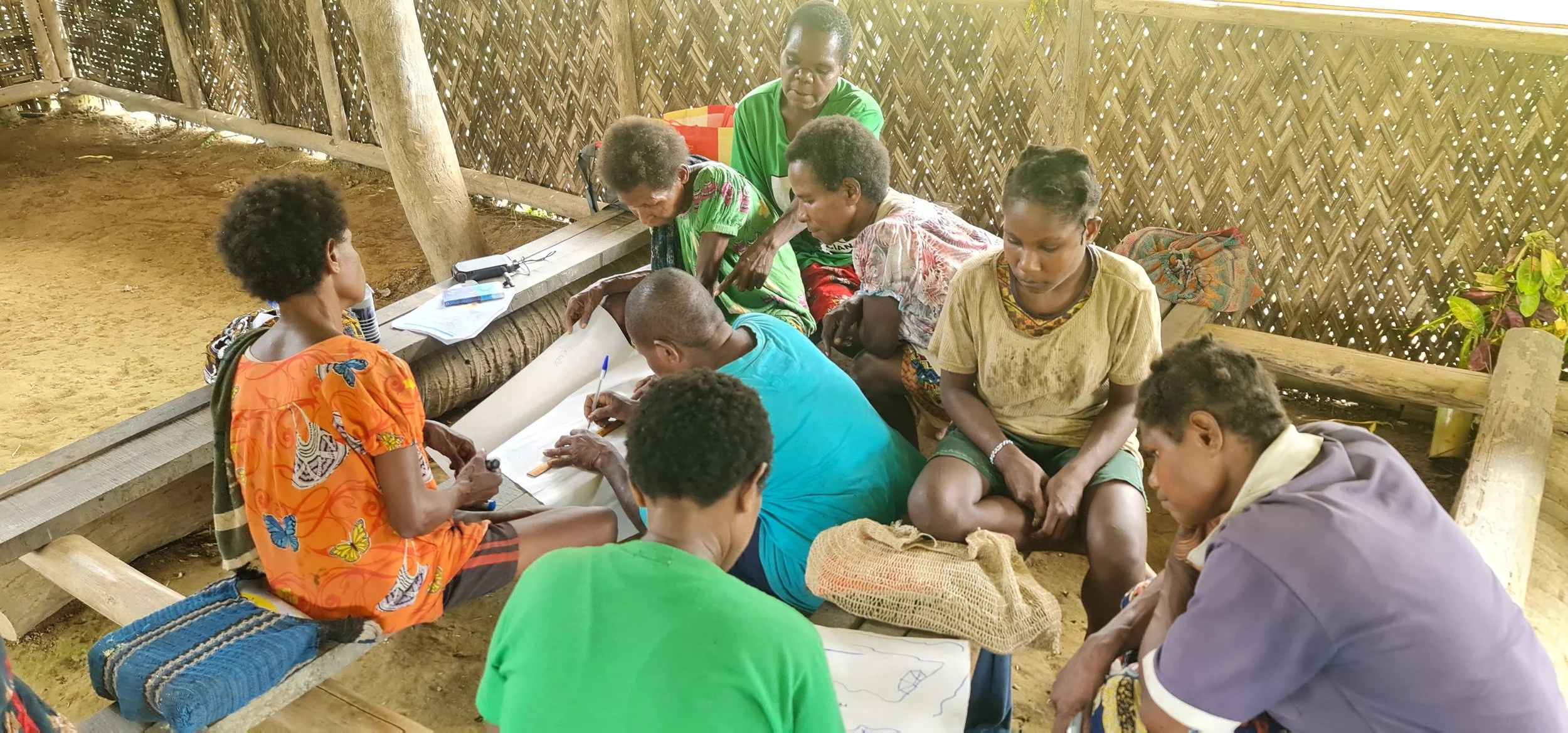
VBAs drawing maps of their region and identifying their nearest health centre.
For women living hours from the nearest health facility, accessible only by river, through unpredictable weather, with transport that may or may not be available - the gap between knowing that something is wrong and getting help can be impossibly wide. It's a gap that has cost the lives of mothers and babies for generations. Living Child's Helpim Mama project exists to help close that gap.
It would be easy to look at a map of rural Papua New Guinea and say: the problem is geography. And geography is certainly part of it. Road access ends at Angoram. Beyond that, the river is the road. A woman in labour who needs urgent care must travel by boat - if there is one available, if there is fuel, if the weather allows, if her family can afford the journey.
But the barriers run deeper than distance. They include the decisions that have to be made before anyone even boards a boat. Families weighing the cost of travel against uncertainty. Mothers unsure whether what they are experiencing is truly dangerous. Communities that have lost women before and carry the weight of that knowledge.
Helpim Mama takes this reality seriously. The program doesn't simply tell women to seek care at a health facility, although it strongly encourages this wherever possible. It asks a harder question: what happens when getting to a health facility isn't possible? And it builds an answer from the ground up.
Training the People Who Are Already There
The heart of the Helpim Mama program is a comprehensive training guide designed for Village Health Assistants and Village Birth Attendants, community members who are already trusted, already present, and already doing their best to support the women around them.
Living Child's guide equips these volunteers with evidence based, structured, practical knowledge covering the full arc of pregnancy, birth and early motherhood. Modules move from the foundations - understanding the barriers women face, the basics of reproductive health, how to care for a pregnant woman - through to the more complex realities of birth itself, including how to assist safely when a woman simply cannot reach a health facility in time.
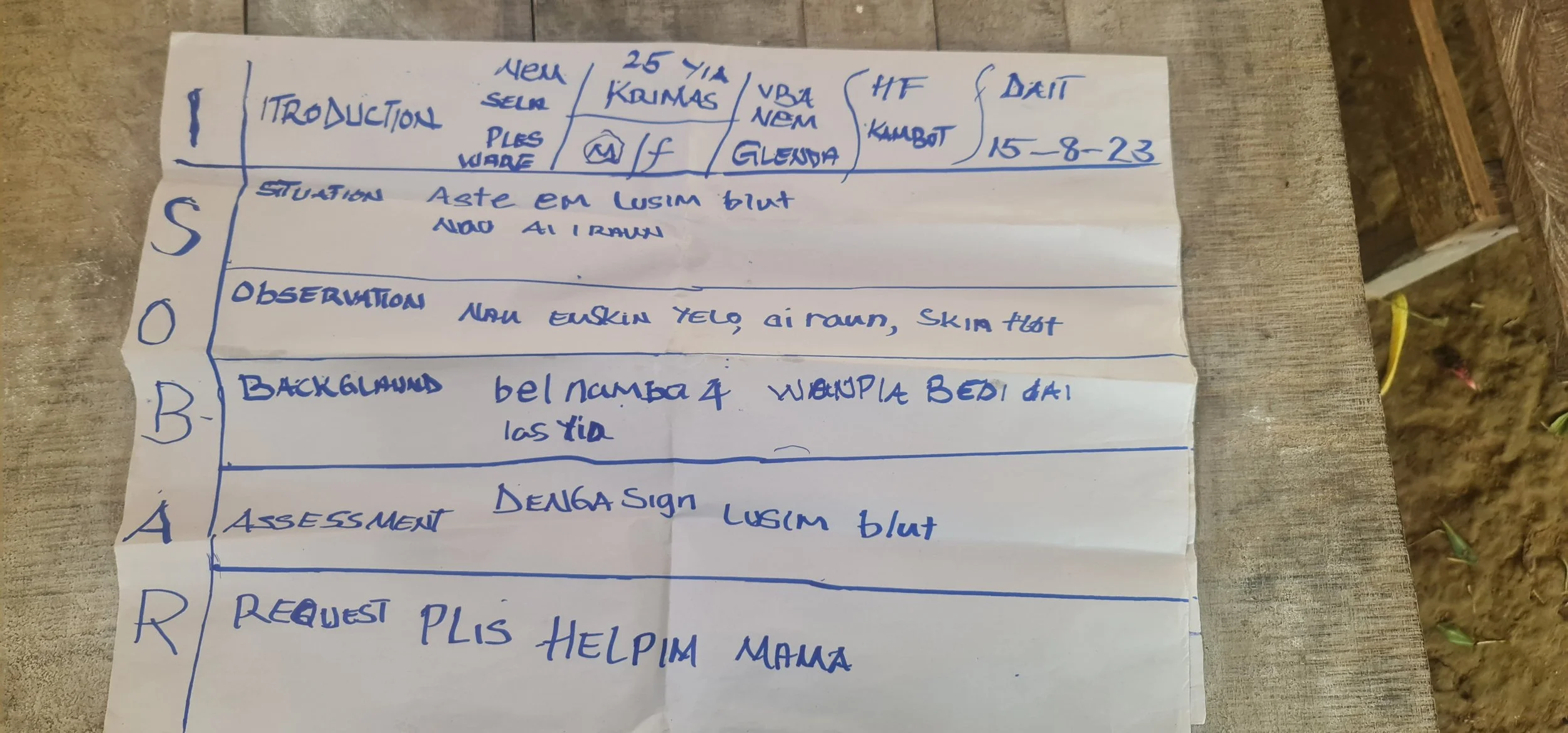
One of the most important elements is education around danger signs. Volunteers are trained to recognise the warning signs that mean a mother or baby needs urgent medical attention: severe headaches, bleeding, dangerous swelling, high fever, a baby who has stopped moving. These signs can be easy to miss or dismiss. Knowing them - and knowing what to do when they appear - can mean the difference between life and death.
The training also covers referral pathways in detail. Knowing a danger sign is only useful if a volunteer knows what to do next: how to communicate clearly with health professionals, how to help a family plan, how to connect a community member to skilled care. The program uses practical tools to help volunteers have these conversations confidently, even under pressure.
Bringing the Training to the Community
Helpim Mama training is designed for contexts where literacy may be limited, where learning happens best through demonstration and discussion, and where the people being trained are community members, not medical professionals. The training uses visual aids, role-play, case studies, and hands-on demonstration with models to make sure knowledge is genuinely absorbed, not just received.
Crucially, the training is delivered in the communities where it's needed most. Living Child brings qualified, experienced health workers out to remote villages to run sessions. For many participants, this may be some of the only formal health education they have ever had access to.
The program is honest about its scope. Village volunteers are not being trained as substitutes for skilled birth attendants or medical professionals. They are being trained as educators, communicators, and community connectors, people who can recognise when something is wrong, take basic steps to help, and get mothers to the care they need as quickly as possible.
Three Delays, One Response
Public health researchers who study why mothers die in remote and low-resource settings often refer to what they call "the three delays", the delay in deciding to seek care, the delay in reaching a health facility, and the delay in receiving adequate care once there.
Helpim Mama is designed to address all three. By educating communities about danger signs, the program helps reduce the first delay, hesitation and uncertainty about whether to seek help. By training volunteers in referral pathways and practical planning, it helps reduce the second, the time lost when families don't know who to call or how to organise transport. And by training volunteers to provide basic, safe assistance in emergencies, it helps protect mothers and babies during the third, the period when skilled care simply hasn't arrived yet.
Why This Work Matters Now
Papua New Guinea's maternal and newborn health statistics reflect a system under enormous pressure. For women in remote communities, the risk of dying during or after childbirth remains far higher than it should be, not because solutions don't exist, but because the geography of these communities makes accessing those solutions so difficult.
The McLellan Community Centre, currently under construction in Yamen, will give programs like Helpim Mama a permanent home. A proper training hall. Quality accommodation for visiting health professionals and program facilitators. Infrastructure that makes it possible to bring skilled trainers to the community, and to keep them there long enough to make a real difference.
For women along the Keram River, that's not a small thing. It's the difference between help that never comes and help that arrives.